During your visit you can explore the former camp grounds, which today houses the Museum and an architectural commemoration of the victims. Its most important element comprises the clearing with the mass graves, where the victims’ remains and ashes rest. Another element, the Wall of Remembrance, marks the final path of the victims to the gas chambers. Their foundations are presented in special display cases. The Museum grounds also include the former roll-call square in Lager I, where the prisoner uprising began. The spatial commemoration additionally comprises the layout of the barbers’ workshop barracks, where female victims were shaved, as well as the barracks of Sonderkommando and the tunnel through which they wanted to escape from the camp. The visitors can also see the railway ramp, where the trains with deportees arrived in Sobibór.
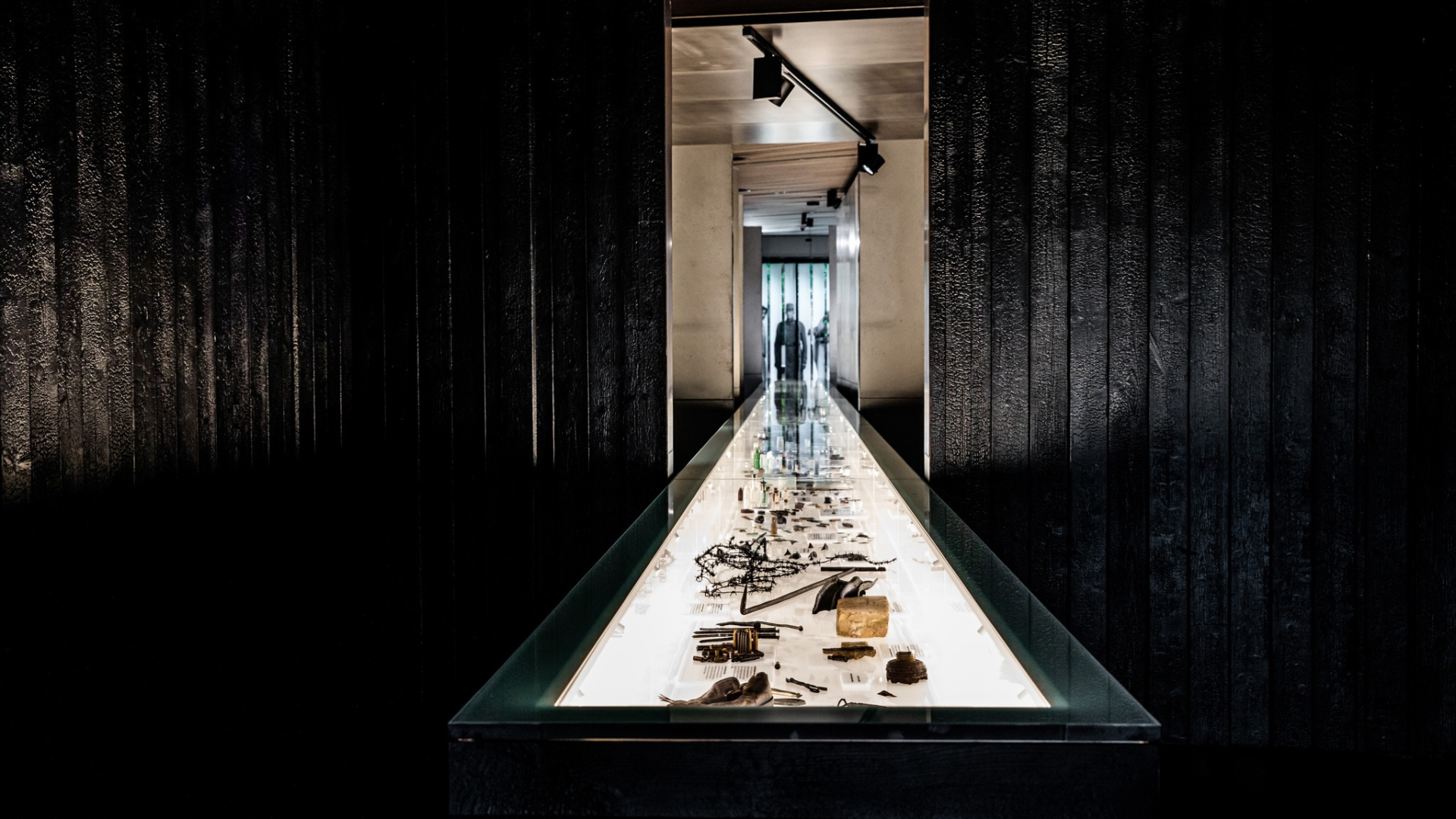
The main Museum building houses the permanent exhibition SS-Sonderkommando Sobibor. German Death Camp 1942–1943. It contains over 700 artefacts, mostly the personal belongings of the victims that were unearthed during the archaeological research conducted in the years 2000–2020.