Discover History

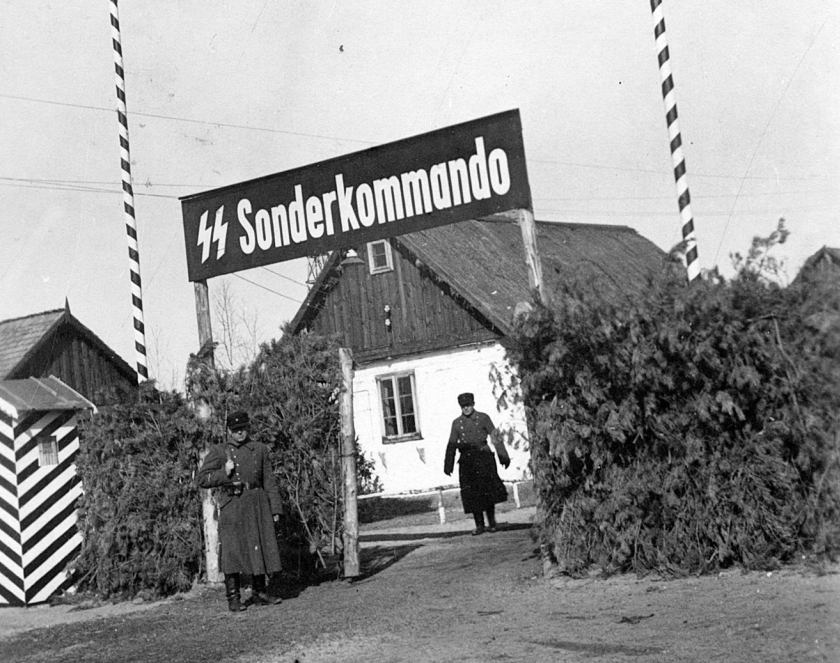
Black-and-white photograph. Entrance to a fenced compound marked with a sign reading “SS Sonderkommando.” Two uniformed guards stand near the gate, with a wooden building visible in the background.
The extermination camp in Sobibór was one of the three main centres of mass extermination of the Jewish population established as part of “Aktion Reinhardt.” It operated from 1942 to 1943. During this time, approximately 180,000 people were murdered there– mainly Jews from Poland, but also from the Netherlands, Austria, Czechia, Germany, Slovakia, and France. On 14 October 1943, an uprising broke out in the camp. After killing several SS members and guards, a large group of prisoners managed to escape. Only about 50 of them survived until the end of World War II.

Camp History

Sobibór is a village on the River Bug, in the eastern part of the Lublin Voivodship, near the border with Ukraine. Approximately five kilometres to the west, there is a train station bearing the same name (Sobibór Stacja Kolejowa). During the Second World War, this small settlement was incorporated by the Germans into the ‘Final Solution’ – their euphemism for the mass extermination of the European Jews. In the spring of 1942, they established a death camp there, called SS-Sonderkommando Sobibor. It was one of the three killing centres – besides the camps in Bełżec and Treblinka – of the genocidal operation implemented by the Third Reich under the codename ‘Einsatz Reinhardt’. Until November 1943, it claimed the lives of about two million human beings.
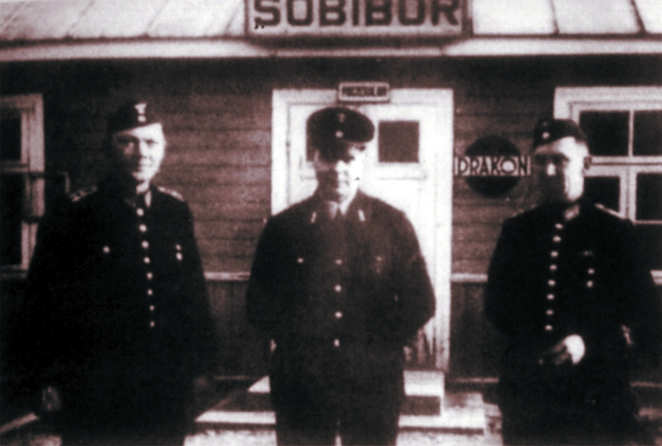
A black-and-white photograph showing three men dressed in black railway uniforms standing in front of a wooden, single-storey building. In the background, a white entrance door is visible, above which hangs a large, rectangular, white sign bearing the black inscription ‘Sobibór’.
German railwaymen in front of the train station building in Sobibór

Timeline

The first prisoners were brought into the camp in early 1942. Learn the detailed course of the camp history...

"Varia" Magazine

Dive into our free on-line magazine to discover stories that go beyond our academic writings, analyses of post-camp artefacts, and reports of our central activities.

History Highlights

Learn more about the history of the camps, personal stories of the victims and prisoners, and museum collections

view all articles