Artefacts from Sobibór in the collections of the State Museum at Majdanek

Artefacts from Sobibór in the collections of the State Museum at Majdanek

Liquidated as the last of the Operation “Reinhardt” camps, SS-Sonderkommando Sobibór was intended to be forgotten forever. The traces of the crime, erased in the autumn of 1943 along with evidence of the lives of the Jews murdered in the camp, have, however, been recovered through archaeological research and preserved. By the end of 2023, more than 66,000 artefacts obtained during twelve excavation seasons, as well as items found during clearing work and geophysical surveys, had been transferred to the storerooms of the State Museum at Majdanek. Of these, 753 are on display in the permanent exhibition at the Museum and Memorial in Sobibór, which reopened in its new form in October last year.

Archaeological work was conducted at the site of the former German extermination camp in Sobibór between 2000 and 2020. The excavations occurred in stages, each usually lasting several months and referred to as research seasons. As a result of these efforts, a large number of artefacts were recovered – primarily personal belongings of the victims, as well as elements of the camp’s infrastructure.
After the archaeologists transfer the finds to the State Museum at Majdanek, our staff carefully examine all the relics in detail, analysing, among other aspects, their state of preservation, historical and scholarly value, material, factory markings, and any inscriptions. Owing to the vast number of objects received and their often very poor condition, the work must be carried out meticulously and with great care, so that no trace is overlooked – one that may prove crucial in uncovering the history of Sobibór. Already during fieldwork, the discovered items are classified by archaeologists either as individual finds or as objects occurring in large quantities.

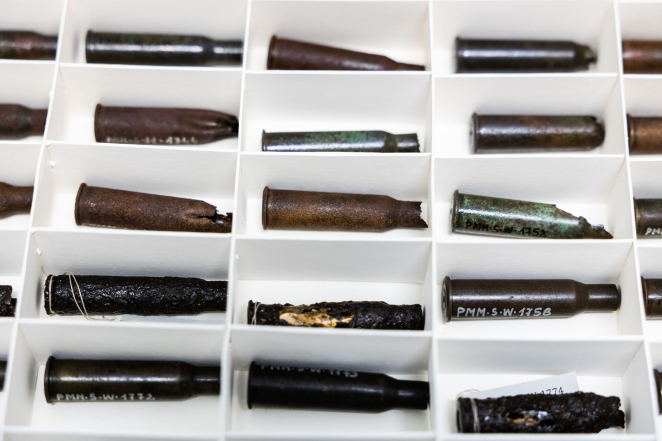
A dozen or so spent cartridge cases in acid-free containers with separators, some bearing visible inventory numbers.

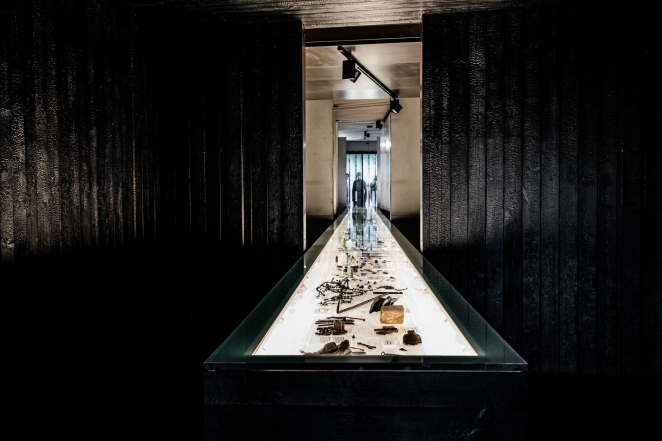
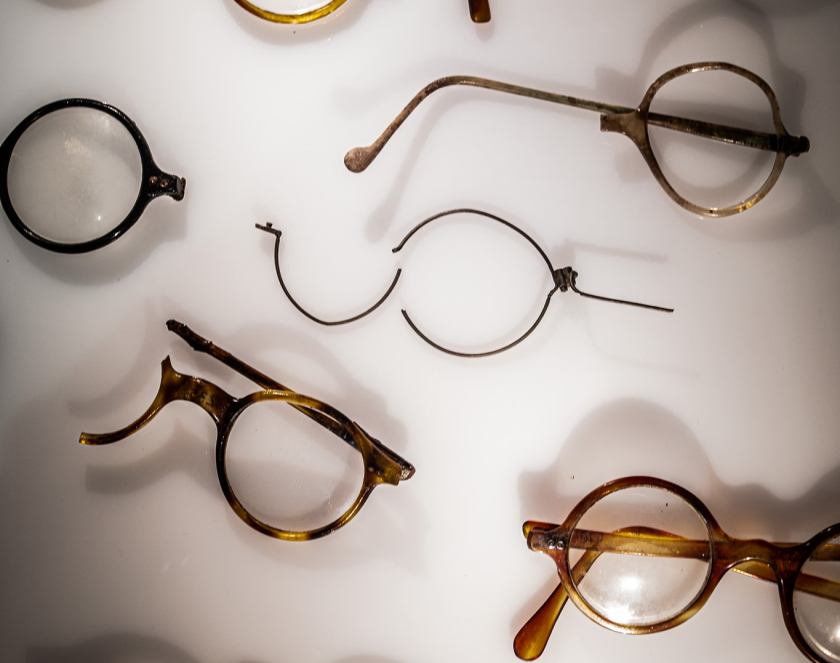
Individually identified artefacts are items preserved either intact or in a condition that allows their function, origin, or even owner to be determined. They can therefore be assigned specific identifying features, enabling their entry into the museum register and allocation of individual inventory numbers. Currently, this collection comprises 13,571 objects. Some are displayed in a case forming the central axis of the permanent exhibition at the Museum and Memorial in Sobibór.

A milky-white illuminated display case containing objects, situated in a darkened room.

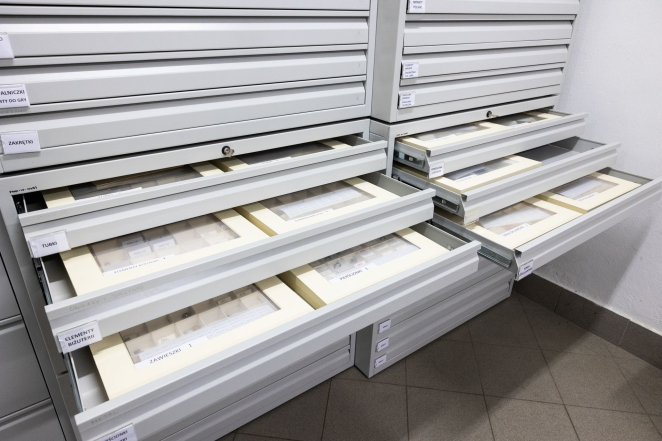
Sobibór artefacts are stored in the historical collections storeroom of the State Museum at Majdanek. Sorted by function or material, they are kept in acid-free cardboard boxes with compartmentalised inserts, arranged in drawer units or on shelves. This storage method facilitates identification and allows ongoing monitoring of their condition. The artefacts are available to researchers during enquiries conducted at the museum and are also loaned for temporary exhibitions to institutions in Poland and abroad.

A metal cabinet with numerous metal drawers; inside the drawers are acid-free boxes containing small museum artefacts.

Artefacts entered into the museum inventory undergo conservation work, aimed primarily at cleaning, halting the progression of corrosion, and securing the objects. For each item recorded in the inventory register, both cataloguing documentation and photographic records are prepared.

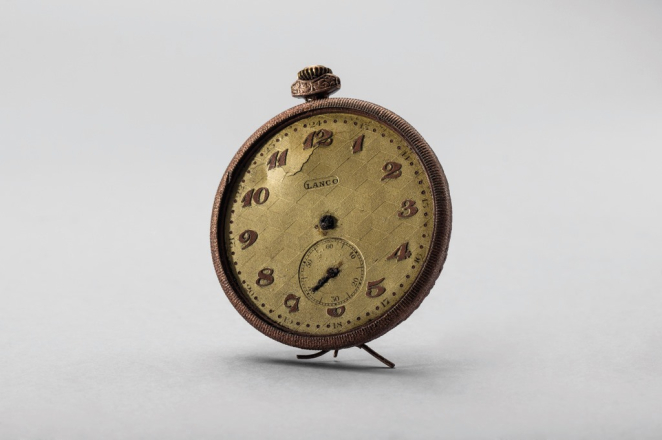
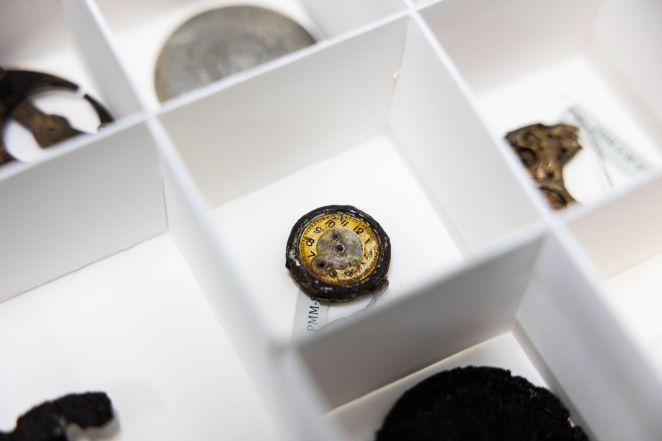
A pocket watch with a brass-coloured dial, lacking its hands and protective glass.
Watches of the Lanco brand were produced by the Swiss Langendorf Watch Company, founded in the mid-19th century by the Kottmann family. The preserved example dates from the 1920s to 1940s.

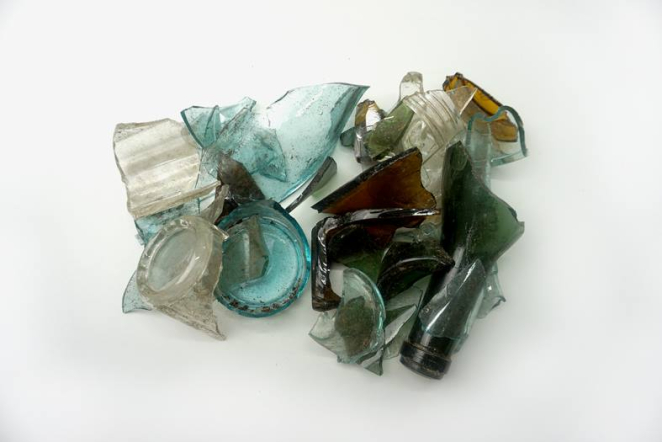
Mass finds are collections of fragments that are difficult to characterise and occur in very large quantities. Those discovered in Sobibór consist mainly of shattered glass – often fire-damaged – broken ceramic vessels, elements of destroyed aluminium objects, and fragments of brick, concrete, slag, iron, and non-ferrous metals. In the museum, they are recorded in the auxiliary collections register. Typically, only the type of material from which they are made and their quantity (given in kilograms) are specified. Mass finds are stored in appropriately labelled containers, organised according to the raw material from which they were made. These collections also include modern objects not identified by archaeologists in the field but recognised later at the museum.

Fragments of broken, multicoloured glass.

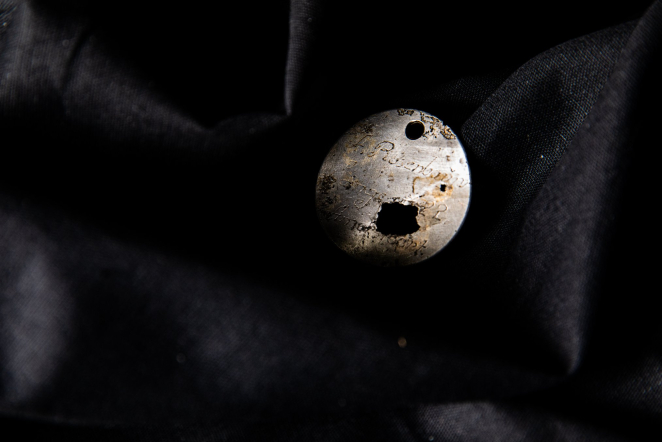
While examining mass finds, it is sometimes possible to encounter unique and personal items. This was the case, for example, with an identification tag bearing the details of Albert Rosenbaum, discovered among the bulk material – one of only a few objects that can be attributed to a specific individual murdered in Sobibór.

A round metal tag, scratched and showing hole-like damage, set against a black velvet background.
The identification tag of Albert Rosenbaum, a merchant from Amersfoort who was murdered in Sobibór on 9 July 1943, aged 54.

In the coming years, we will classify, study, and enter into the appropriate registers the objects recovered during excavations in 2010, 2012, and 2014–15, as well as those obtained through archaeological supervision during the construction of the new memorial in 2021–2023. In total, this amounts to more than 57,400 objects.