SS-Sonderkommando Sobibor (1942-1943)

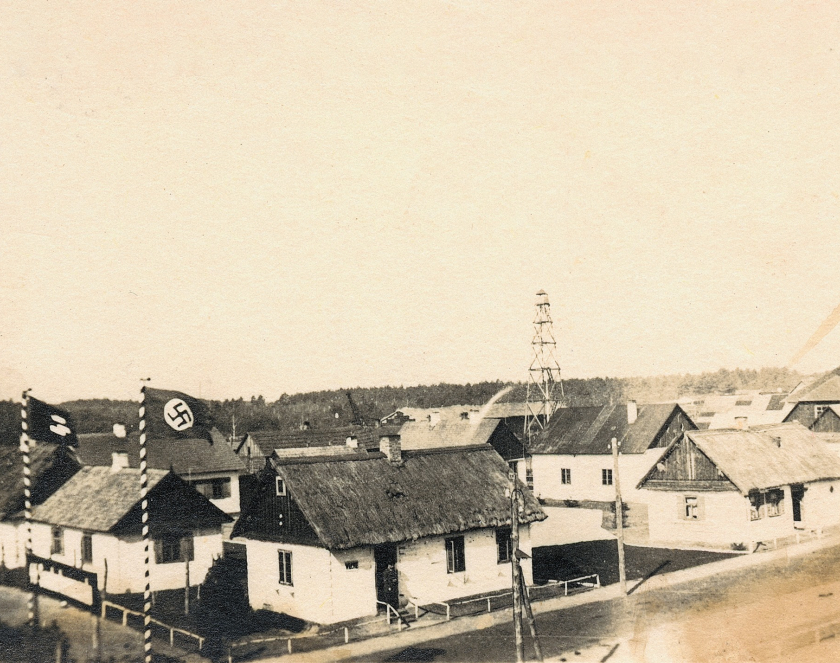
A few houses surrounded by a hedge; on the left, a plaque reading “SS Sonderkommando” and two Nazi flags.

Camp Origins and Establishment

German Nazi death camp SS-Sonderkommando Sobibor was created at the turn of April and May 1942 as the second, after Bełżec, facility of extermination of Jews established within the framework of operation “Reinhardt”. The decision regarding its establishment was given in late October 1941 in the light of the planned Nazi programme of eliminating all Jews residing in the General Government and deporting thousands of Slovak Jews to the Lublin district.

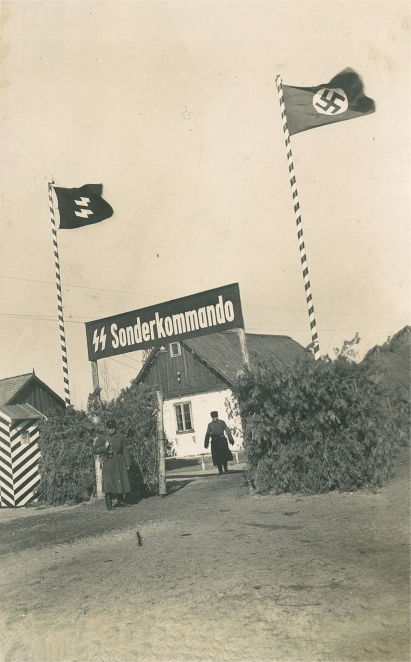
A white building with a sloping roof, a gate bearing the inscription “SS-Sonderkommando,” Nazi flags on either side, and a man in a German uniform standing in the centre.

Preparations for the camp construction began in late autumn of 1942, but the proper works were initiated in the spring of 1942 and conducted by forced labourers. The compound was established near a train station building in Sobibór and inside a dense forest, which isolated the site from potential witnesses.

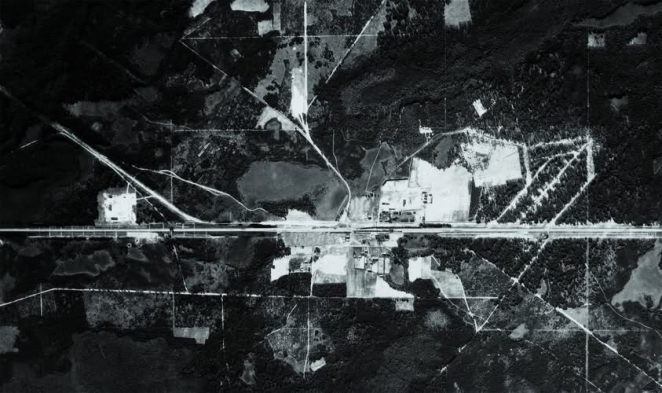
A black-and-white aerial photograph showing the site of the former Sobibór extermination camp and the surrounding forest, with a railway line visible.
1944 aerial photograph of the former grounds and infrastructure remnants of the German extermination camp in Sobibór.

Location and Topography

The camp was located directly near the railway line connecting Lublin, Chełm, and Włodawa, which provided convenient conditions for the transports reception. The area was divided into three zones (Lager I-III), where various structures were erected: barracks for SS-men, watchmen from the SS-Wachmannschaften trained in Trawniki, and for prisoners; as well as the warehouses for the possessions stolen from the Jewish deportees. Lager III was completely isolated from the other zones. There the gas chambers were located, where – just like in SS-Sonderkommando Belzec – the perpetrators murdered their victims with carbon monoxide generated by a petrol engine.

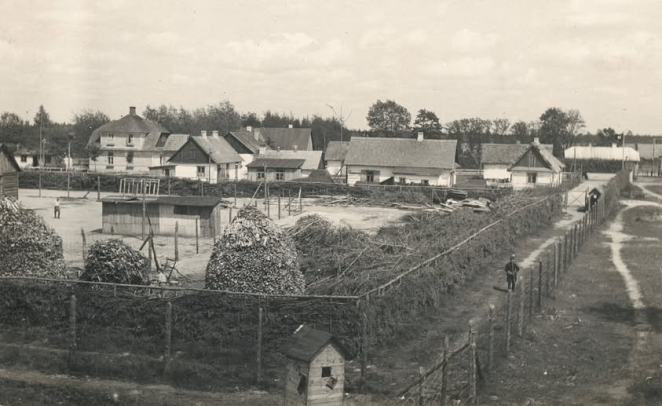
A cluster of low, white houses, surrounded by a double fence made of barbed wire and branches.
Vorlager, 1943.

Garrison

The highest authority in the camp was held by its commandant, who had a garrison of SS functionaries at his disposal. In total a group of 30 German and Austrian SS-men, and a sentry unit of 120-150 watchmen (former Soviet POWs) served in Sobibór. Franz Stangl was the first camp commandant, who held this post between April and August 1942. Then, he was replaced by Franz Reichleitner who was stationed in the camp until its final liquidation.

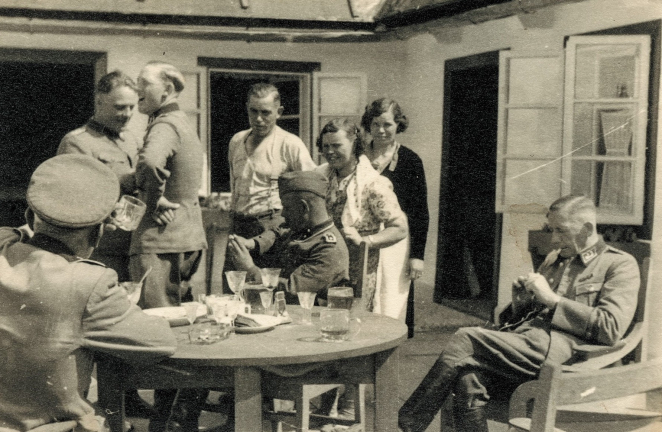
A group of people—men in German uniforms and women in civilian clothes—seated at a table set with wine glasses and water glasses, with a white house in the background.
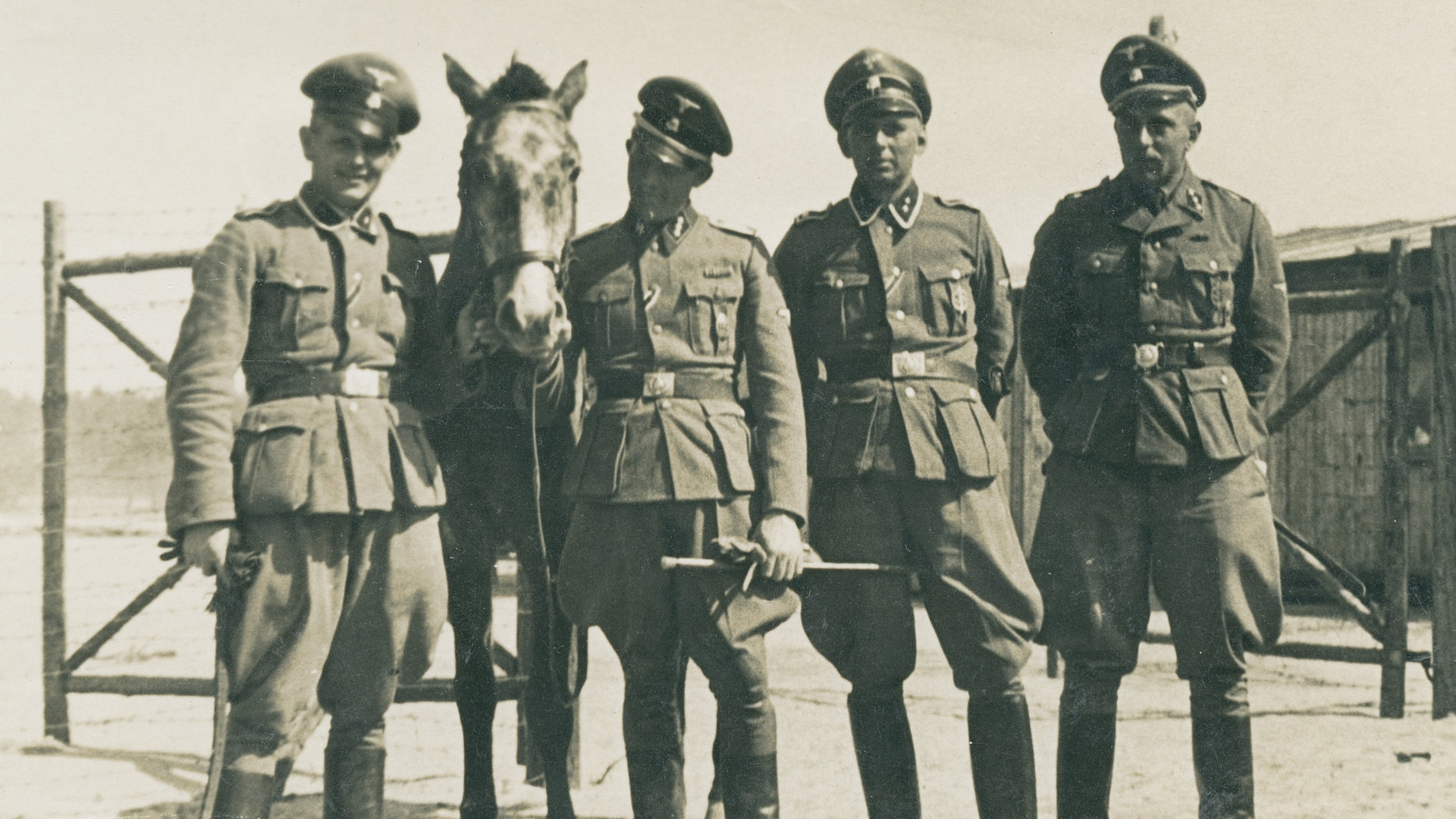
A black-and-white photograph showing four young men in German SS uniforms posing in a row against the backdrop of a barbed-wire fence and a wooden barracks. Two of them are holding gloves and batons, while the other two have their hands clasped behind their backs. A dark-colored horse stands between the men, with one of them holding its bridle. There is a cheerful atmosphere among the SS men.
SS-men in Sobibór, summer 1943. From the right: Paul Rost, Rudolf Beckmann, Johann Niemann, N.N.

Transports

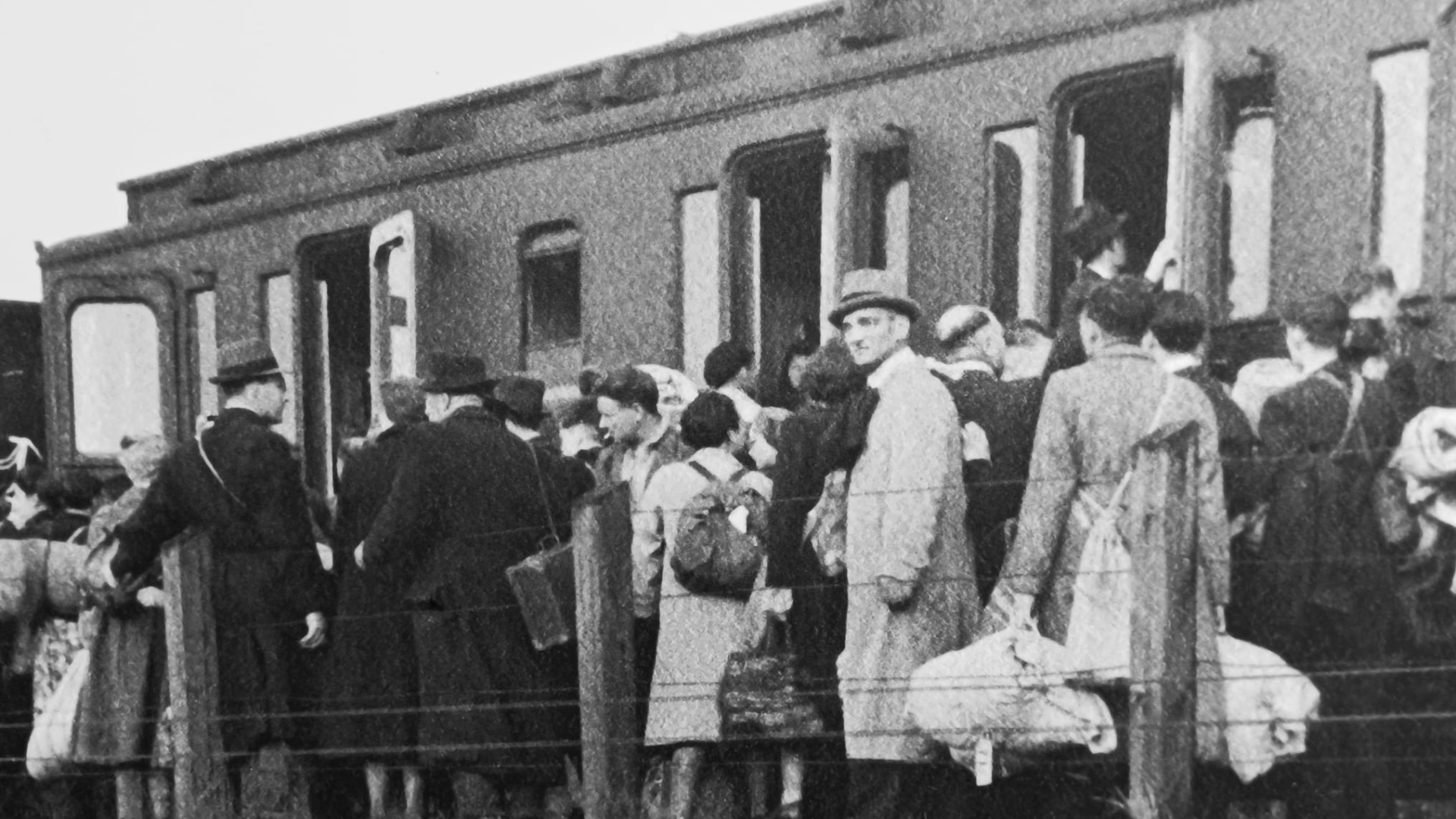
Due to the maintenance works on the Lublin-Chełm railway line, the camp received a limited number of transports in the summer of 1942. Many victims were brought by trucks or were herded into the camp on foot at that time. The railway transports began arriving in greater numbers from September 1942. They mostly came from around the Lublin district. Apart from the Polish Jews, also the Austrian, Czech, German and Slovak Jews, who had first been displaced into the so-called transit ghettos, were then deported. Following the shutdown of the extermination camp in Bełżec, the transports from the Kraków and Galicia districts were sent to Sobibór from early 1943. The last remaining Jews from the Lublin region were also murdered at that time. 19 transports from the Netherlands carrying 34,313 victims arrived in Sobibór between March and late July 1943. Additional four transports came from France in March. The last trains with the victims came in early autumn of 1943 with the Jews from the ghettos in Vilnius and Lida, and from the labour camp in Minsk.

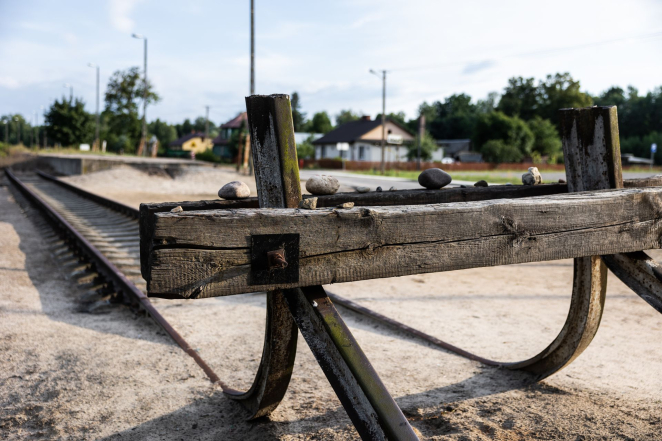
A wooden railway bumper with a row of stones on top, train tracks are visible in the background.
Contemporary shape of the railway platform preserved on the grounds of the Museum and Memorial in Sobibór
Dutch Jews boarding a deportation train to an extermination camp.

Prisoners’ Labour

Some prisoners (around 500 men and 100 women) were selected for labour upon their arrival at the camp. They were forced to bury the victims’ bodies, sort the plundered belongings, and serve the SS-men and watchmen from the camp garrison. The prisoner-workers were sometimes subjected to additional selections with some being sentenced to death and replaced with newcomers.

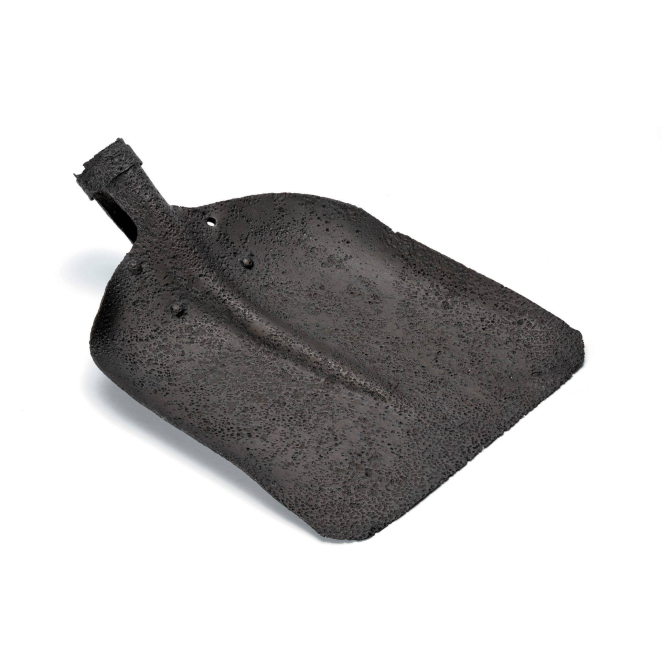
Rusty shovel element.
Shovels were used for various types of groundworks. Among the heaviest tasks performed by the prisoners were digging pits wherein the victims’ bodies were moved from the gas chambers, and later also uncovering the mass graves for cremation.
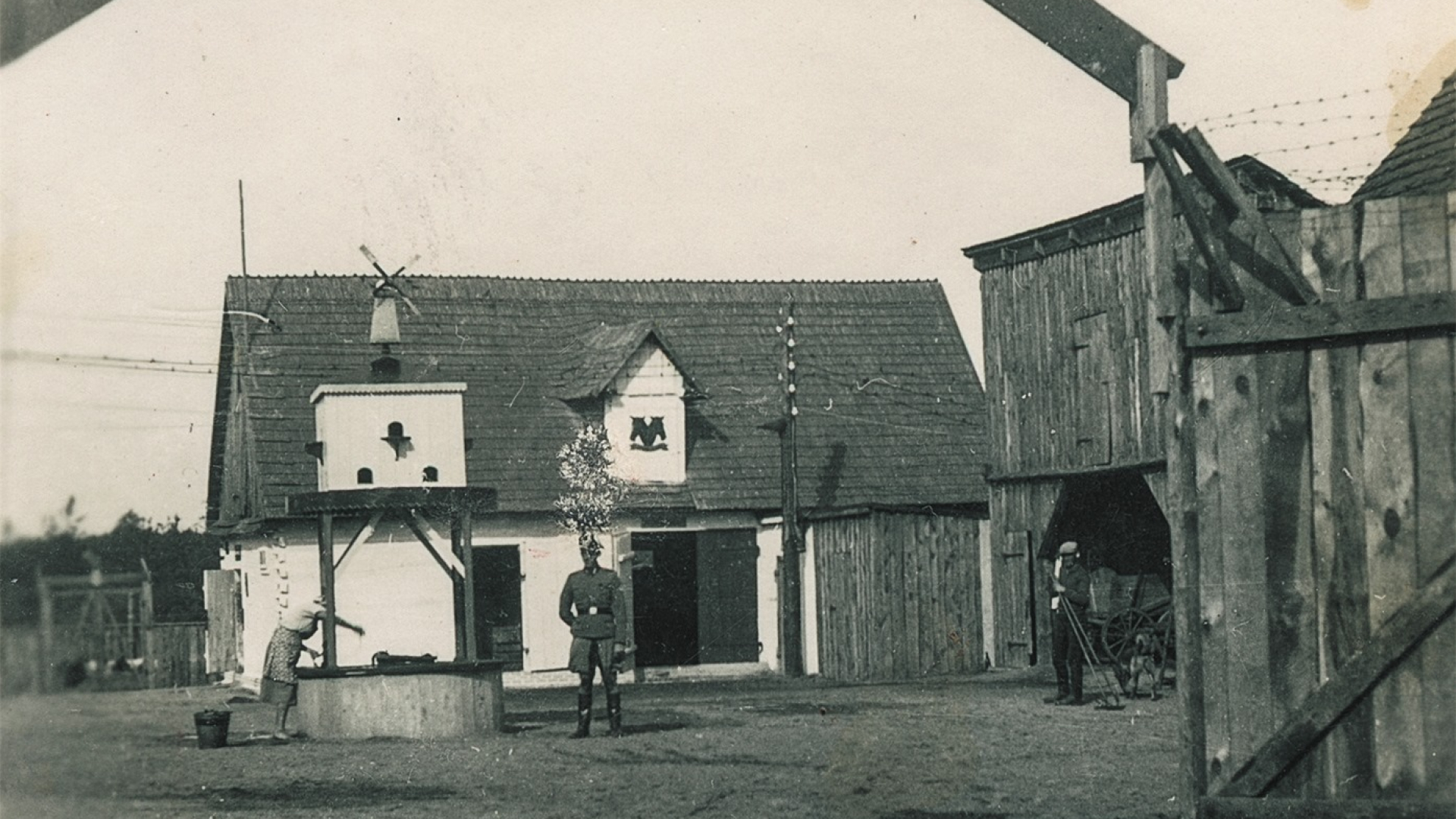
A black-and-white photograph showing an open space with a well and a white, single-storey building in the background. A man in a German uniform is standing by the well. In the foreground is a gate, above which is the decorative inscription ‘Erbhof’.
The buildings of Lager II, including the decorative entrance to Erbhof; the camp well and the white stables building are visible in the background, 1943.

Extermination in the Gas Chambers

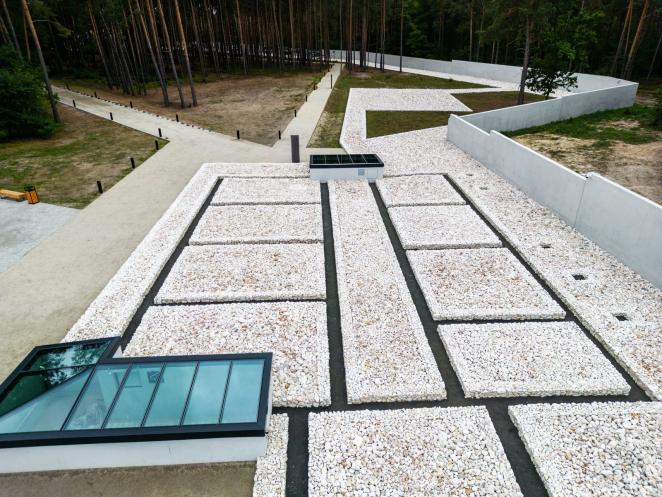
In Sobibór the Germans began the mass killings in early May 1942. The first gas chambers were built on the basis of design applied earlier at the death camp in Bełżec. A wooden barracks erected on concrete-and-stone foundations housed three chambers. It also had a wooden annex with an engine, which generated exhaust fumes used to murder the victims. Between June and September 192, the gas chambers were remodelled. The existing structure was expanded with additional four red-brick chambers placed on concrete-and-brick foundations. Both parts were joined with a corridor, the annex was converted into additional killing room, and the whole building reached the number of 8 gas chambers. According to a testimony of one of the SS-men, up to two fumes-generating engines were connected to the building. The killing process took approximately 20 minutes.

Initially, the victims' bodies were buried in mass graves located within the Lager III area. In late spring of 1942, the process of burning the corpses began, which continued to the very end of the camp’s operations. Bodies were burned in the open air on stakes, built on grates made of railway parts.
The foundations of the gas chambers are covered with white aggregate; on the left is a glass-enclosed display case showing the appearance of the archaeologically preserved foundations.
The layout of the gas chamber building is now visible to the visitors. It has been reconstructed on the basis of the original foundations unearthed during archaeological research. Their fragments are presented is specially designed display cases.
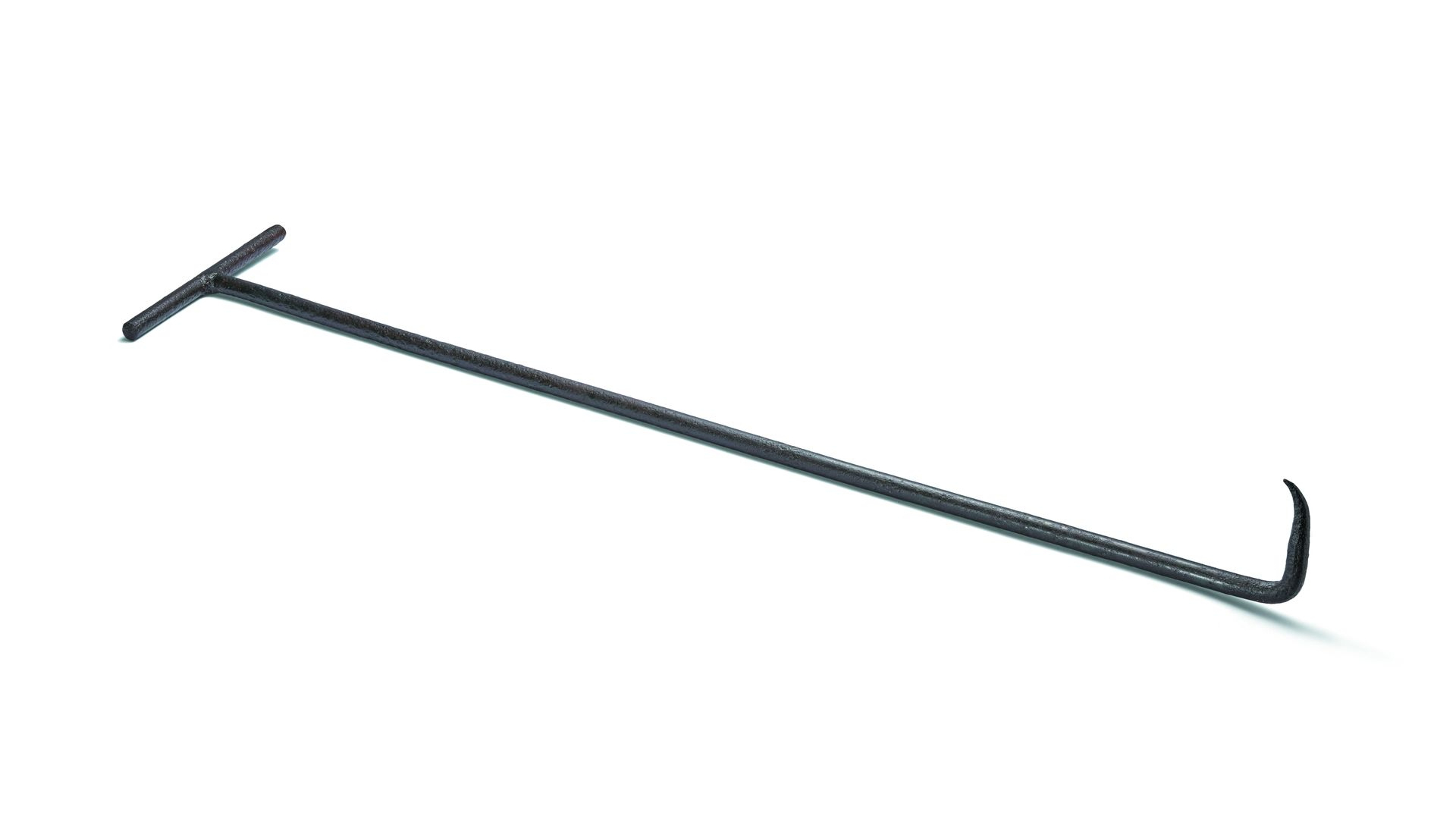
A photograph showing a metal hook with a long handle.
Hook used by Sonderkommando to remove the bodies from the gas chambers.

Escapes

The first escape attempts were made already in 1942. Five prisoners managed to break free on the night of 25/26 December. Another successful attempt was made on 23 July 1943, when 28 inmates escaped from the woodcutting labour team working in the forest.

Not all attempts were successful, and any signs of resistance were punished, also in the form of collective responsibility. A group of Dutch Jews working in Sonderkommando were plotting an escape, but their plan was discovered by the SS-men, who murdered 120 prisoners in retaliation.

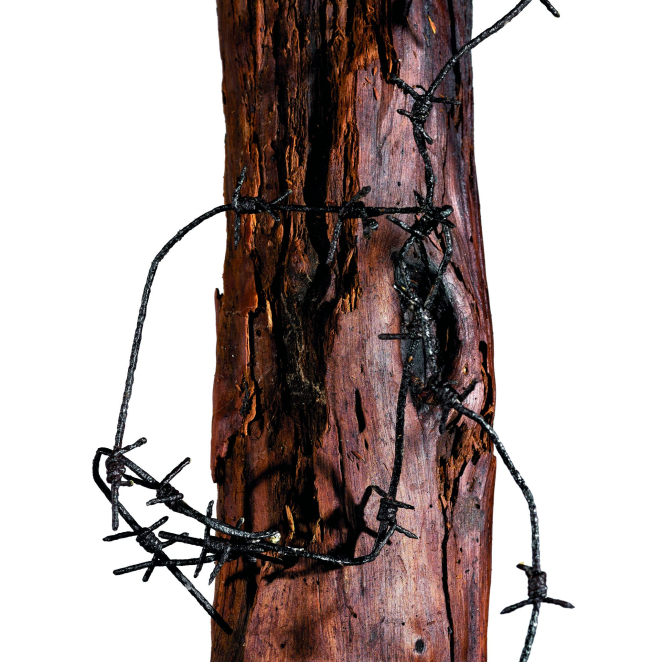
A section of a tree trunk with in-grown barbed wires.

Prisoner Uprising

A resistance group among the prisoners was formed in the summer of 1943. Their efforts to oppose the SS and escape from the camp accelerated after the arrival of transports from Minsk in September 1943. From among those deportees, the Germans selected a group of Soviet POWs for labour. Their military experience proved invaluable in the planning of an armed revolt. The resistance had two leaders – Lejba (Leon) Felhendler, who was from among the so-called “old” prisoners (mostly Polish Jews), and Alexander Pechersky who led the Soviet POWs.

Prisoner uprising took place on 14 October 1943. The inmates eliminated several SS-men and guards, and then managed to break out of the camp. Many Jews were killed with bullets and on the minefield surrounding the camp. A full-scale manhunt was organised, within the course of which most prisoners were caught and killed. Around 50 insurgents survived until the end of World War II.

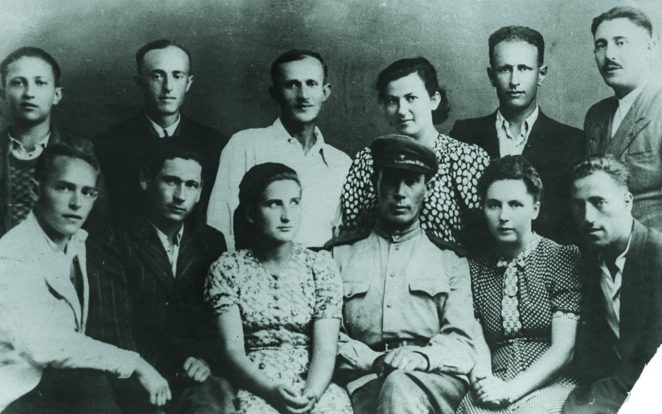
Czarno-białe zdjęcie przedstawiające grupę młodych ludzi.
Photograph of the Holocaust survivors (including the Sobibór uprising participants) taken in Chełm in August 1944. Top row from the left: Meier Ziss, Chaim (Israel) Trager, Chaim Powroźnik, N.N., Chaim Feder, Lejba (Leon) Felhendler. Bottom row from the left: Josef Duniec, Josef Herszman, Zelda Metz, Salomon (Szlomo) Podchlebnik, Luba Feder, Szlojme Czesner.

Liquidation of SS-Sonderkommando Sobibor

In the aftermath of the successful revolt, the Germans made a decision about the final liquidation of the camp. A group of prisoners were brought from Treblinka to dismantle its infrastructure. The materials that could have been reused were shipped away. Gas chambers were demolished with explosives. The camp grounds were ploughed over and planted with trees. When the liquidation works were accomplished, the prisoners from Treblinka were murdered.

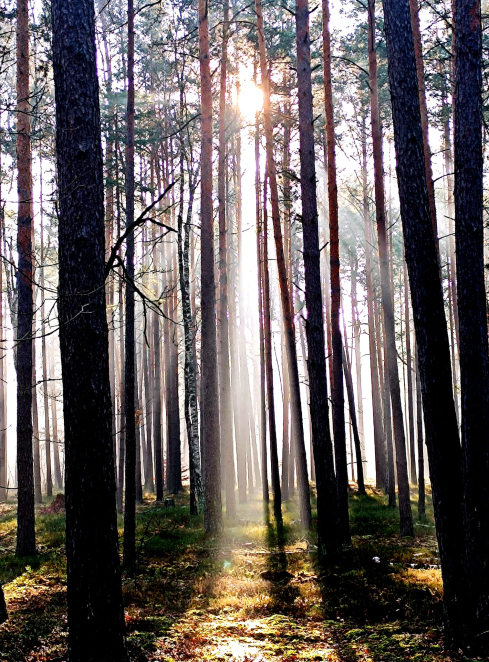
Dense forest with sunbeams flwoing in among tree trunks.

Death Toll

It is estimated that 180,000 Jews were murdered in the extermination camp in Sobibór. The Polish Jews constituted over a half of the victims. The remaining ones were the deportees of various German-occupied countries of Europe. While the Jews deported from Western Europe were registered on transport lists, the Jews deported from the occupied territories of Poland or Belarus were never registered, and they mostly remain anonymous.

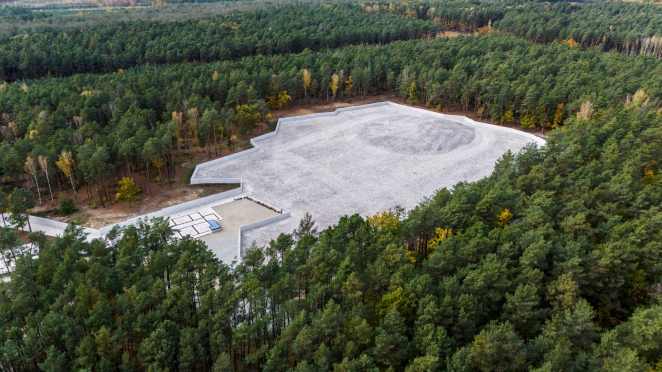
An aerial view of a clearing with graves covered in white gravel and a clearly man-made mound, surrounded by a green forest.
Clearing with the mass graves